- Welcome to Westlake Publishing Forums.

News:
REGARDING MEMBERSHIP ON THIS FORUM: Due to spam, our server has disabled the forum software to gain membership. The only way to become a new member is for you to send me a private e-mail with your preferred screen name (we prefer you use your real name, or some variant there-of), and email adress you would like to have associated with the account. -- Send the information to: Russ at finescalerr@msn.com
Recent posts
#61
Modellers At Work / Re: Luke's Garage & Gas Statio...
Last post by fspg2 - September 04, 2026, 11:25:13 PMIt might look something like this...
file_000000003e7881f4b30a6666cb2ad279 (fspg2)
file_000000003e7881f4b30a6666cb2ad279 (fspg2)
#62
Modellers At Work / Re: Luke's Garage & Gas Statio...
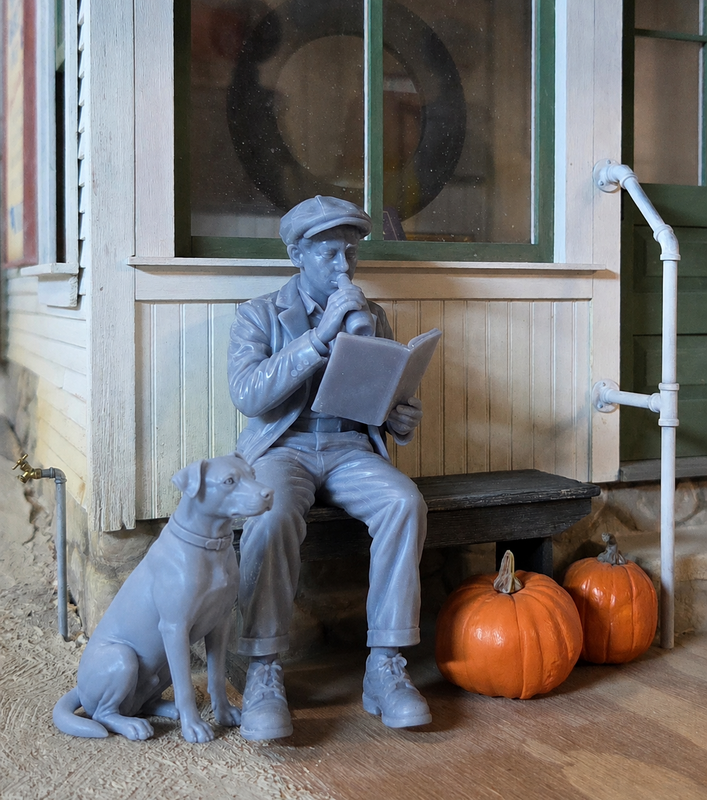
Last post by Stuart - September 04, 2026, 09:08:42 PMQuote from: fspg2 on September 01, 2026, 10:25:47 PMI could also imagine a dog that might further enhance the whole scene ;-).
Frithjof -- Funny you should mention the dog idea. My sister-in-law, when she saw what I was doing, had the same thought. We'll see.
Stuart
#63
Modellers At Work / Re: Luke's Garage & Gas Statio...
Last post by Bernhard - September 04, 2026, 01:39:28 PMI think the solution involving the foot operation is very authentic. In German, we call them 'Hochwasserhosen' (high-water trousers). They're often worn by boys going through the growth spurt.
Bernhard
Bernhard
#64
Modellers At Work / Re: Shasta Pacific outdoor rai...
Last post by finescalerr - September 03, 2026, 11:56:26 AMWhat a tedious and difficult modification! -- Russ
#65
Modellers At Work / Re: Shasta Pacific outdoor rai...
Last post by NORCALLOGGER - September 03, 2026, 06:49:57 AMBack with a little more progress. It has been a fun build so far trying to engineer from pictures is always a little problematic. I always find a few spots where I scratch my head and think "why didn't I take a couple more pictures or measurements in that spot?"
The "Athey Truss Wheels" did not have cleats on the track pads so obviously the "cat" tracks had to be altered to make them at all usable. I found that I could mount the track section in the drill press vise and hold them reasonably well while I ran them through the mill and cut the cleats and bolt heads off. There was quite a lot of variance in the cuts because each individual pad would be held tight or not so tight depending on the part of the casting clamped in the vise. I only ruined 3-4 pads but they are easily replaced and when all done everything had to be hand dressed with a file for uniformity anyway.

The completed "Athey Truss Wheel" assembly with the axel beam in place. The tracks look alright on there but they are definitely not a reproduction of the prototype. It was pointed out during the course of the original construction that I did not include the inner pad that the wheels ran on. At the time I just did not feel that this project warranted fabricating of masters, casting 96 to 192 plus pieces, then assembling them to get a finished product that will look so similar once painted that not one in a hundred will know the difference anyway. Sloppy I know but that's the way of it.


That's all for this morning
Rick
The "Athey Truss Wheels" did not have cleats on the track pads so obviously the "cat" tracks had to be altered to make them at all usable. I found that I could mount the track section in the drill press vise and hold them reasonably well while I ran them through the mill and cut the cleats and bolt heads off. There was quite a lot of variance in the cuts because each individual pad would be held tight or not so tight depending on the part of the casting clamped in the vise. I only ruined 3-4 pads but they are easily replaced and when all done everything had to be hand dressed with a file for uniformity anyway.
The completed "Athey Truss Wheel" assembly with the axel beam in place. The tracks look alright on there but they are definitely not a reproduction of the prototype. It was pointed out during the course of the original construction that I did not include the inner pad that the wheels ran on. At the time I just did not feel that this project warranted fabricating of masters, casting 96 to 192 plus pieces, then assembling them to get a finished product that will look so similar once painted that not one in a hundred will know the difference anyway. Sloppy I know but that's the way of it.
That's all for this morning
Rick
#66
Modellers At Work / Re: I’m back!
Last post by Bill Gill - September 03, 2026, 04:13:44 AMI heard the shopkeeper is related to the Massachusetts witches on his mother's side...sort of a Winston-Salem thing going there.
#67
Modellers At Work / Re: I’m back!
Last post by lab-dad - September 02, 2026, 06:54:54 PMYes. Made the bag. Thanks!
The shopkeeper is a descendent of Winston Churchill
MJinTN
The shopkeeper is a descendent of Winston Churchill
MJinTN
#68
Modellers At Work / Re: The Rail Bike of a sort -...
Last post by finescalerr - September 02, 2026, 12:27:08 PMGood gracious, Narayan, I am a respectable citizen and would never even consider watching anything so immoral! -- Russ
#69
Modellers At Work / Re: Luke's Garage & Gas Statio...
Last post by fspg2 - September 01, 2026, 10:25:47 PMAs you demonstrated with the extended foot, it would certainly be worth trying to replace just the part of the bottle above the fingers.
Or what do you think about printing the entire figure out of clear resin?
I could also imagine a dog that might further enhance the whole scene ;-).
Or what do you think about printing the entire figure out of clear resin?
I could also imagine a dog that might further enhance the whole scene ;-).
#70
Modellers At Work / Re: Luke's Garage & Gas Statio...
Last post by Stuart - September 01, 2026, 06:46:35 PMQuote from: Bill Gill on September 01, 2026, 05:15:48 AMI'm curious to see how you tackle the orange soda bottle and the magazine cover.
Bill -- Yes, the transparent bottle of orange soda will present a challenge. My solution will be to very carefully cut and grind away the current opaque bottle using my rotary grinding tools. This will be a delicate operation as the printing resin I am using is quite brittle. The hope is that I can remove the current soda bottle, leaving his hand and fingers intact. Then, I will reprint the soda bottle in clear resin leaving a hollow core to insert some orange resin to simulate the orange soda and slip it into his open hand. The comic book cover can be resolved with the application of a decal which I will need to create and print. Oh, the efforts we modelers make to carry out our exacting desires!!
Quote from: nk on September 01, 2026, 12:04:48 PMThe floating feet read as not fully grown.
NK -- The attached photo will show that his heels are still raised to their original position with only his toes making contact with the ground. He still has some growing to do before full foot contact can be made from his perch on the bench.
Stuart